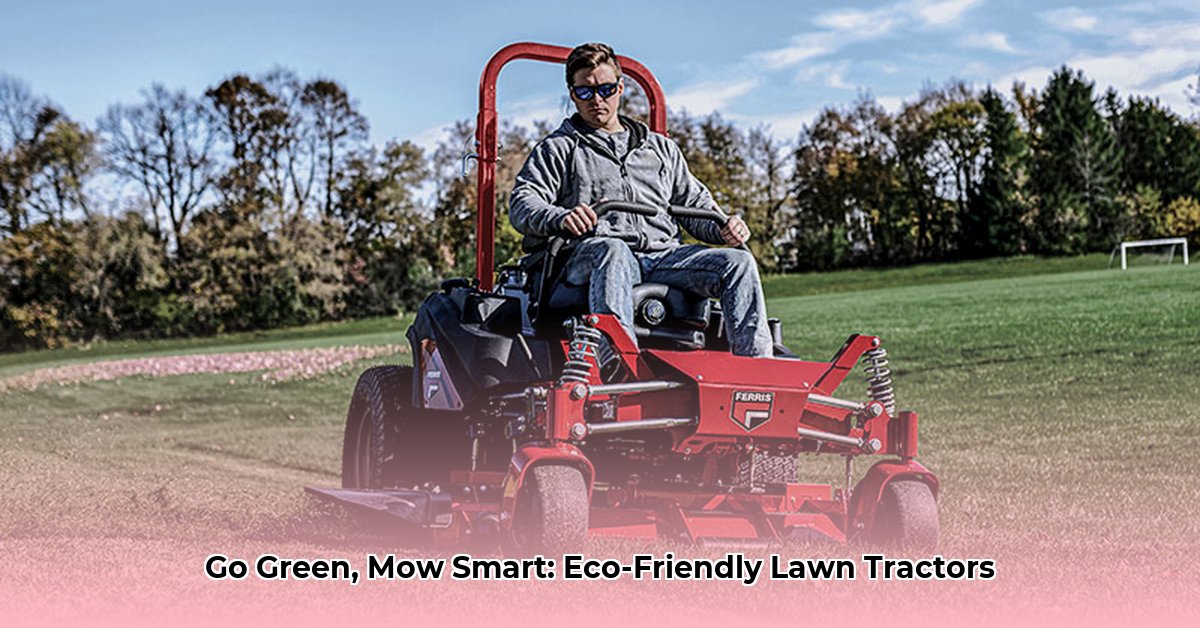
Choosing the right commercial lawn tractor is a significant investment impacting both your bottom line and your environmental footprint. This guide offers a comprehensive approach, balancing operational efficiency with sustainable landscaping practices. For more towing information on lawn tractors, check out this helpful resource.
Sizing Up Your Needs: Assessing Your Landscaping Operation
Before exploring specific models, thoroughly assess your landscaping needs. Consider the size and type of properties you maintain. Are you working with expansive, flat areas or smaller, intricate landscapes? What types of terrain do you encounter (e.g., hills, slopes, obstacles)? Accurately assessing your workload ensures you choose a machine with adequate power, maneuverability, and efficiency. Ignoring these factors may lead to purchasing underpowered or overly complex equipment.
Building for the Long Haul: Durability and Choosing Wisely
Commercial lawn care demands robust equipment that can withstand daily wear and tear. Investing in a durable mower translates to reduced repair costs and extended lifespan. Prioritize mowers manufactured with high-quality materials and reinforced components. Look for a machine built to endure years of intensive use. This upfront investment offers a significant return on investment (ROI) through longevity and reduced replacement expenses. A machine's longevity directly impacts its overall environmental impact, since fewer replacements mean less manufacturing waste.
Going Green: Eco-Conscious Choices for a Sustainable Future
Sustainability is no longer optional; it's a pathway to smart business. Modern commercial mowers offer eco-friendly features. Mulching decks, for instance, recycle grass clippings into natural fertilizer, reducing waste and minimizing the need for chemical treatments. Adjustable cutting heights promote healthy turf growth, leading to a more vibrant and resilient lawn. Fuel efficiency directly translates to lower operating costs and a smaller carbon footprint. Explore electric or alternative fuel options; while still developing, these technologies offer a path to significantly greener operations. Recent advancements suggest these options will become increasingly viable in the near future.
Your Step-by-Step Guide to the Perfect Mower
Finding the perfect commercial lawn tractor requires a systematic approach:
- Detailed Site Assessment: Accurately measure your properties, note terrain variations, and identify obstacles.
- Budgetary Constraints: Establish a realistic budget, incorporating initial costs, maintenance expenses (oil changes, blade sharpening), and fuel consumption projections.
- Thorough Research: Research reputable manufacturers, meticulously comparing specifications like engine power (horsepower), cutting deck width, and deck types (mulching, side-discharge, bagging).
- Prioritize Key Features: Identify essential features, such as mulching capabilities, adjustable cutting heights, fuel efficiency, and ergonomic design for improved operator comfort and reduced fatigue.
- Test Drive (if possible): Whenever feasible, test-drive various models to assess maneuverability, comfort, and power firsthand.
- Scrutinize Online Reviews: Consult online reviews and ratings from verified users to gauge reliability and real-world performance.
- Explore Financing Options: Investigate leasing or financing options to manage the upfront investment.
Comparing the Contenders: Riding vs. Walk-Behind Mowers
The choice between riding and walk-behind mowers hinges on your specific needs:
| Feature | Riding Tractor | Walk-Behind Tractor |
|---|---|---|
| Ideal For | Large, open areas; efficient large-scale mowing | Smaller properties; detailed work; complex terrain |
| Terrain Suitability | Best on relatively flat ground | Excellent maneuverability on uneven terrain |
| Efficiency | High speed, covers extensive areas quickly | Lower speed, but precise for intricate areas |
| Maneuverability | Limited in tight spaces | Superior in confined areas |
| Maintenance | Generally more complex | Typically simpler maintenance |
| Initial Cost | Higher | Generally lower |
Maintaining Your Investment: Regular Maintenance for Longevity
Regular maintenance is crucial for optimal performance and extended lifespan. This reduces downtime and prevents costly repairs.
- Oil Changes: Follow manufacturer recommendations for regular oil changes to ensure efficient engine performance and minimize wear.
- Blade Sharpening: Sharp blades provide clean cuts, prevent lawn damage, and improve cutting efficiency. Sharpen or replace blades frequently.
- Deck Cleaning: Regularly clean the underside of the cutting deck to remove grass clippings and debris.
- Component Inspections: Periodically inspect belts, pulleys, and other moving parts for wear. Replace damaged parts promptly.
- Proper Storage: Store the mower in a dry, covered area during off-seasons to protect it from the elements.
How to Choose a Sustainable Commercial Mower for Eco-Friendly Landscaping
Choosing a sustainable mower involves a holistic approach. Dr. Emily Carter, Professor of Mechanical and Aerospace Engineering at Princeton University, emphasizes, "Sustainable landscaping requires a multi-pronged approach, integrating equipment efficiency and responsible mowing practices."
Understanding Your Specific Needs
Before selection, precisely define your landscaping operation. This includes property size, terrain complexity, grass types, and mowing frequency. This detailed assessment informs your mower selection and enhances the efficiency of your operation.
Traditional vs. Eco-Friendly Mowers: A Comparative Analysis
Traditional gas-powered mowers offer high power but increase emissions and noise pollution. Electric or manual reel mowers provide cleaner, quieter operation, but may lack the power for extensive commercial projects. This trade-off demands careful consideration. "The choice depends entirely on the scale and characteristics of the job," says Mark Olsen, Landscape Architect at GreenThumb Landscaping.
Key Features to Prioritize
- Engine Type: Gas-powered engines offer superior power but higher emissions. Electric motors provide cleaner operation but may have limited power for hilly terrains.
- Cutting Deck: Wider decks increase speed but reduce maneuverability. Mulching capabilities provide an eco-friendly alternative to removing clippings.
- Maintenance Requirements: Gas mowers demand regular upkeep (oil changes, tune-ups). Electric mowers need battery maintenance and charging. Assess long-term costs.
- Durability and Longevity: Choose a robust machine built to withstand daily commercial use for extended service life.
Choosing the Right Mower: A Step-by-Step Process
- Comprehensive Needs Assessment: Define your property size, terrain, grass types, and mowing frequency.
- Budgetary Planning: Determine your budget, encompassing purchase price, maintenance, fuel costs, and potential resale value.
- Mower Option Research: Explore gas-powered, electric, and manual options, comparing features, performance, and environmental impact.
- Dealer Support Verification: Confirm reliable dealer support for timely repairs and maintenance.
- Informed Decision-Making: Select a mower aligning with your needs, budget, and environmental goals.
Environmentally Conscious Mowing Practices
Sustainable landscaping necessitates responsible practices:
- Mowing Height Optimization: Maintain a slightly taller mowing height to encourage healthy lawn growth and reduce stress on the grass.
- Sharp Blade Maintenance: Sharp blades ensure clean cuts, promoting healthy turf and preventing lawn damage.
- Reduced Chemical Use: Minimize or eliminate fertilizers and pesticides, opting for natural lawn care methods.
Choosing the right commercial lawn tractor is a critical decision. A thorough assessment of needs, combined with careful consideration of sustainability, ensures both efficient operation and environmentally responsible landscaping practices.